6 Jan, 2026 | Admin | No Comments
The worrying new way people are ‘faking weight’ for Mounjaro prescriptions
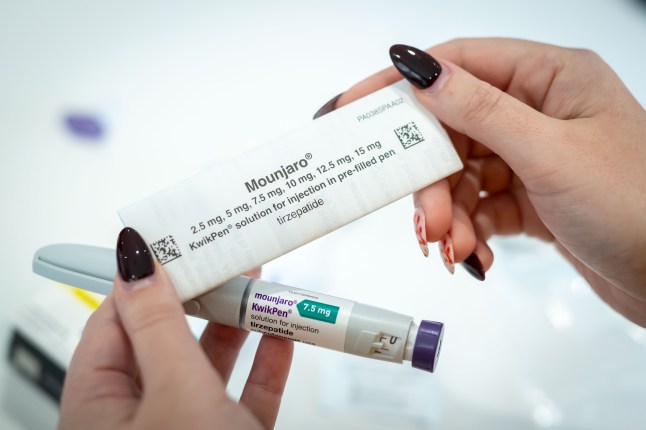
Weight loss jabs like Mounjaro exploded in popularity in 2025 after being rolled out on GP prescription.
The injections are intended to help people manage type 2 diabetes and/or obesity. They work by mimicking the hormones released in our bodies when we eat, reducing appetite and increasing feelings of fullness.
However, it seems a worrying number of people have managed to cheat the system and are obtaining prescriptions, despite not needing the medication.
An investigation by ITV has revealed that young people with healthy BMIs have been using AI and photo-editing software to manipulate pictures and ‘fake their weight’.
This, in turn, has given them access to powerful weight loss drugs from online pharmacies.

Reporter Cree-Summer Haughton claims she tried this out for herself, using basic editing software to widen her waist, face, and body in an image, before sending it off and receiving Mounjaro.
‘Within a week, three different companies had approved me and sent out three separate prescriptions,’ she wrote.
Several women spoke to the news outlet about their own experience doing this, saying they had obtained weight-loss injections due to ‘body image pressures’. They felt it was an ok thing to do as the drugs had become ‘normalised’ online.
The concerning trend of being able to get weight loss medication using fake images has emerged suddenly within the last six months, according to eating disorder clinicians from Priory.
It’s something that experts warn could fuel disordered eating if it isn’t cracked down on quickly, and as such, they’re pushing for change.
Have you tried weight loss medication?
-
Yes
-
No
-
I'm tempted…
How easy is it to access weight loss jabs online?
People in the UK can now get prescriptions for weight loss injections online, from pharmacies like Boots Online Doctor, who promise ‘convenient, discreet treatment’ with ‘no appointment needed’.
The website says there are three steps you have to follow to do this – the first is an online consultation, which takes five to 10 minutes. Next, there’s a clinical assessment, where pharmacists review your health history and prescribe treatment if appropriate.
Finally, if you require treatment, you’ll be given ‘simple instructions’ on how to take it. You can then pick your prescription up in store or have it delivered straight to your front door.
While the General Pharmaceutical Council (GPhC) has said that a two-way consultation or independent verification is required before giving a prescription, some online pharmacies have not met these standards.
ITV found that some online pharmacies have made it possible for people to use AI-altered images or video in consultations, while others have merely accepted edited photos that people uploaded themselves.
The GPhC says looking at just one photo is ‘not going to be sufficient’.
Their website adds: ‘It is essential that the type of consultation is appropriate to meet the needs of the person, and it allows the prescriber to get enough information to prescribe weight management treatments safely and appropriately.
‘Prescribers must also consider the person’s well-being, given that eating disorders, body dysmorphia, and mental health issues can play a part in the reason for requesting these medications.
‘Prescribing practitioners should make sure that they prescribe in line with legislation and follow good practice guidance.’
When a pharmacy fails to meet the standards set by the GPhC, it can take enforcement action in order to protect patients. So far, enforcement action has been taken against 18 pharmacies in the UK.

What safeguards need to be put in place?
Hira Malik, the superintendent pharmacist and co-founder of Oushk Pharmacy, tells Metro: ‘ITV’s investigation is a timely reminder that weight loss injections are powerful prescription-only medications, not cosmetic quick fixes.
‘If people with a healthy BMI can access them by uploading edited photos, that is a patient safety issue and risks fuelling disordered eating.
‘To prevent this from escalating further, online prescribing needs further safeguards.’
She added: ‘Online care can be convenient, but it must be rigorous. The sector needs consistent, enforceable standards on verification, counselling and follow-up so that those who genuinely meet clinical criteria get treatment safely and those who don’t are protected from harm.’
Appearing on Good Morning Britain, Health Secretary, Wes Streeting, claimed he has also seen stories of people ‘trying to pull the wool over the eyes of the provider’ for weight loss medication.
He continued to say that his team is looking closely into the matter to ‘make sure the prescribing environment is safe’.
The biggest pros and cons of weight loss jabs
If you do meet the criteria for weight loss medication and are considering taking them, you’ll want to do your research on the topic. To help you, Dr Suzanne Wylie, GP and medical adviser for IQdoctor, shared some of the biggest pros and cons of weight loss injections with Metro.
Here’s a look at what she had to say…
Pros
Weight loss
The amount of weight you can lose is impressive, with studies showing that patients typically see at least a 10% to 15% weight reduction.
‘This can be transformative, especially for those with long-standing obesity where lifestyle interventions alone have failed,’ says Dr Wylie.
Reduction in obesity-related health issues
Dr Wylie explains: ‘Weight loss of this magnitude is associated with a meaningful drop in the risk of type 2 diabetes, hypertension, sleep apnoea, and non-alcoholic fatty liver disease.
‘There’s also early evidence suggesting improved cardiovascular outcomes, even independent of weight loss. And for patients with pre-diabetes, these medications may delay or prevent progression to full-blown diabetes.’
Improved quality of life and mental health
Beyond the physical benefits, Dr Wylie says the ‘positive impact on self-esteem and mood’ caused by weight loss ‘can create a virtuous cycle, making it easier to stay engaged with other aspects of health promotion, such as physical activity and social participation.’
Support for patients who feel stuck
The helping hand these jabs provide can be a major boost for those who feel they’ve ‘tried everything’ without success.
‘As GPs, it’s empowering to have another tool to offer that feels both compassionate and effective.’
Cons
Side effects
‘Gastrointestinal side effects are common, particularly during dose escalation,’ she says, noting that these can include nausea, vomiting, diarrhoea, and constipation.
Dr Wylie also adds than in rare cases, ‘there’s a risk of pancreatitis or gallbladder issues.’
There are other potential complications to look out for too: Ozempic-style weight loss drugs were recently linked to symptoms of depression and suicidal ideation, as well as an increased risk of vision loss.
More worryingly, at the end of last year, the government issued a warning after 10 people died and 68 were admitted to hospital as a result of using the injections.
Long-term use
Unless you overhaul your habits, the results you see while taking these medications won’t last long afterwards.
‘Once stopped, weight regain is common unless there’s been a concurrent and sustainable lifestyle change,’ says Dr Wylie.
Costs
Only ‘very specific patient groups’ are entitled to weight loss jabs on the NHS, and ‘privately, these medications are expensive, often over £200 a month.’
If you go private, it’s important to seriously consider whether you can afford to keep your prescription going for long enough to see results.
Do you have a story to share?
Get in touch by emailing MetroLifestyleTeam@Metro.co.uk.
Write Reviews
Leave a Comment
No Comments & Reviews