29 Nov, 2025 | Admin | No Comments
Doctors said our toddler had tonsillitis — she needed emergency brain surgery
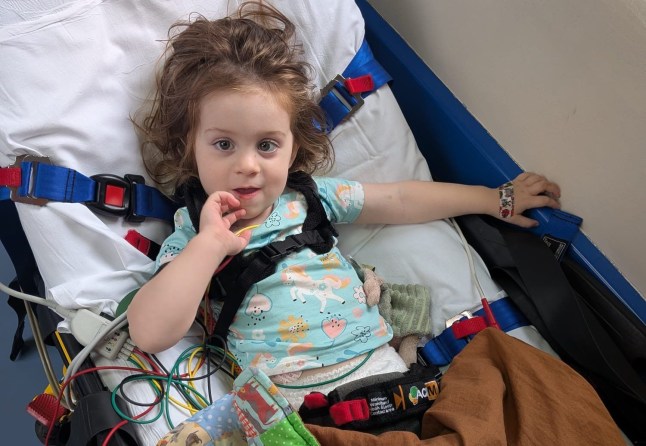
In July this year, two-year-old Harper Gibson’s parents noticed that the toddler was a little more tired than usual and could tell that their little girl wasn’t ‘quite herself’.
‘It was tiny things that, at first, didn’t seem like much,’ her father, George, explains. ‘We made several trips to the GP and A&E, each time being told it was tonsillitis or an ear infection.’
Although Harper was prescribed antibiotics, they did nothing to help – and, as time went on, her worried mum and dad couldn’t shake the feeling something was wrong.
‘Every visit ended the same way – reassurances that she’d be fine,’ George adds. ‘But inside, we both knew something wasn’t right.’
Just a month later, the family received the devastating news that Harper actaully had medulloblastoma, the second most common brain tumour in children, which is potentially life-threatening and sees 52 diagnoses each year.
Her mother Laura, and dad George, from Staffordshire, only managed to the root of their daughter’s condition after a friend suggested a routine eye-test after noticing Harper had a lazy eye, so they took her to their local optician.
‘It’s that instinct parents have; you know your child better than anyone, and we could feel something deeper was wrong,’ George says. ‘The Specsavers team in Safford were incredible.
‘They were calm but serious, and when the optician stopped the test halfway through and explained that something didn’t look right, everything changed.’
Within minutes, they were referred to a local hospital, where scans found a 1.5 square-inch mass on Harper’s brain, with a large amount of fluid at the front.
The litttle girl was quickly transferred to Birmingham Children’s Hospital for specialist treatment, and within two days of the eye test, on 14 August, she was undergoing brain surgery to remove the tumour and find out whether it was cancerous or benign.
‘Waiting through that surgery felt like a lifetime. You sit there as a parent, knowing there’s absolutely nothing you can do but hope,’ recalls George.
While the operation was a success, just a week later the family were back in the hospital nervously waiting for the results. ‘We heard the words that will stay with us forever: the tumour was cancerous,’ George recalls. ‘No parent is ever prepared for that moment.
‘It’s a kind of pain that rips through you in silence. You want to scream, cry, do anything to take it away from them, but you can’t.
‘That night, we both remember feeling like the world had stopped. Everything that used to matter suddenly meant nothing.’
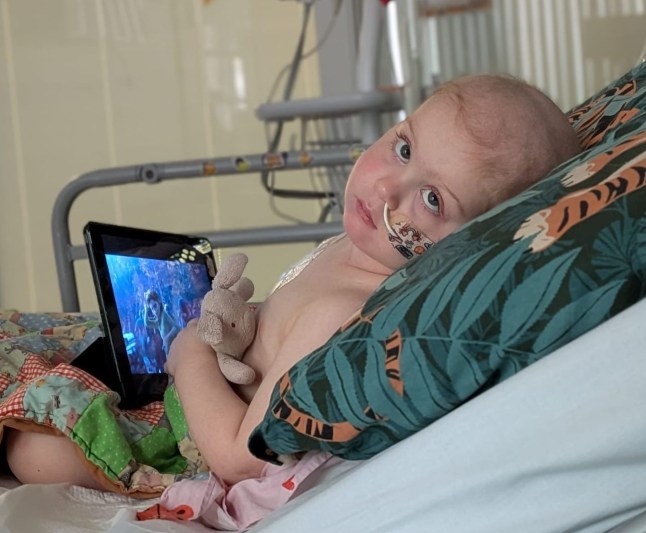
Within days Harper, now three, had begun chemotherapy treatment with the oncology team, but her parents admit it has been hard to watch their little girl go through so much.
‘Before all of this, Harper was full of energy and mischief, a proper little character,’ says George. ‘She loves her doggy BearBear, dancing around the living room, and running circles around us.
‘She was the kind of child who made everyone around her smile. To see that light fade, and to see her hooked up to machines and unable to play, is breaking us.
‘You spend your life protecting your child from harm, then suddenly you’re powerless, watching them go through something no one should have to face.’
Medulloblastoma
Medulloblastoma is the second most common brain tumour in children. It’s the most common malignant (high grade) children’s brain tumour.
It develops at the back of the brain and is more likely to grow quickly, as well as spread to other areas of the brain and spinal chord.
Your child might have symptoms for a few weeks or months before they are diagnosed with medulloblastoma. Many symptoms are general and non specific. Some are similar to less serious childhood illnesses. Symptoms might include:
- headaches in the morning
- feeling or being sick – being sick often makes the headaches feel better
- double vision
- finding it hard to sit or stand unsupported – your child might often fall backwards
- being more fractious or irritable – it might be taking longer than usual to get your young child to settle
- loss of appetite
- behaviour changes – they might be interacting with you or their siblings less
During a young infant’s routine development check up, symptoms sometimes picked up are:
- an increasing head size (head circumference)
- a swollen soft spot on top of the skull (fontanelle)
Source: Cancer Research UK
Harper is still undergoing ‘relentless’ treatment in an attempt to destroy the cancerous cells in her body, but despite this her parents say she ‘keeps smiling’.
‘She finds joy in the smallest moments – a sticker from a nurse, bubbles from a play specialist, or just doing the best she can,’ George adds.
‘Right now, Harper is stable and responding to treatment as well as anyone could hope. The team are positive, but they’ve also been honest – cancer is unpredictable.’
The family add that they are living from one day to the next, after having to ‘rebuild their lives around chemotherapy schedules, hospital stays, blood counts, and side effects’.
‘You lose routine, sleep, work, and sometimes even a sense of who you were before it all began,’ George explains. ‘It’s barrage after barrage, never knowing when the next hit will come.
‘But Harper’s spirit keeps pulling us through. Somehow, through all of it, Harper shines.
‘She’s taught us more about strength than we could ever teach her.’
The parents also thank the ‘extraordinary’ staff for giving them ‘hope’, saying: ‘They’ve cried with us, laughed with us, and carried us.
‘They still pop in to check on her whenever they can – that kind of care goes beyond duty; it’s love.’
It’s this community spirit that has been the silver lining for the family.
‘Cancer might have taken away a part of her childhood, but it’s also shown us a side of humanity we didn’t know existed,’
‘People who love, care, and fight for children like ours every single day.’
Family friends are currently fundraising to help support the Gibsons financially throughout Harper’s treatment, with a goal of £15,000.
Do you have a story to share?
Get in touch by emailing MetroLifestyleTeam@Metro.co.uk.
Write Reviews
Leave a Comment
No Comments & Reviews