12 Feb, 2026 | Admin | No Comments
Early bowel cancer symptoms all young people should look out for, as James Van Der Beek dies aged 48

Beloved actor James Van Der Beek, died this week aged 48, following a two-year battle with bowel cancer.
The father-of-six was first diagnosed with the condition — also known as colorectal cancer — in the latter half of 2023, having noticed changes in his bowel movements.
After attending a screening, doctors told the ‘Dawson’s Creek’ star the disease had progressed to stage three, meaning it had spread to his nearby lymph nodes.
Despite undergoing treatment however, Van Der Beek ultimately passed away surrounded by his close family on February 11, 2026.
Bowel cancer is the third most common cancer worldwide, sitting just behind breast cancer and lung cancer.
And while it used to be a disease that primarily affected older generations, it’s increasingly prevalent among the under-50s — and as a result, medical professionals are higlighting the importanance of all age groups staying aware of the signs.

Is bowel cancer becoming more common in young people?
Each year, there are 44,000 new cases of bowel cancer in the UK, making it the second most common cause of cancer deaths among Brits.
And what’s even more concerning is that this disease is becoming more prevalent among younger people.
In the UK, rates have increased by 51% in those aged 25-49 since the early 1990s, while in under-24s, bowel cancer rates have increased by 75% over the past 30 years.
Tens of thousands of cancer samples have been archived in the basement at The National Bowel Hospital, kept so that scientists can try and analyse the historic ‘data’ and attempt to learn more about the disease.
Confident in the unique perspective the archives provide, Professor Trevor Graham, from the Institute of Cancer Research, tells the BBC that he believes ‘the answer might be in this room.’
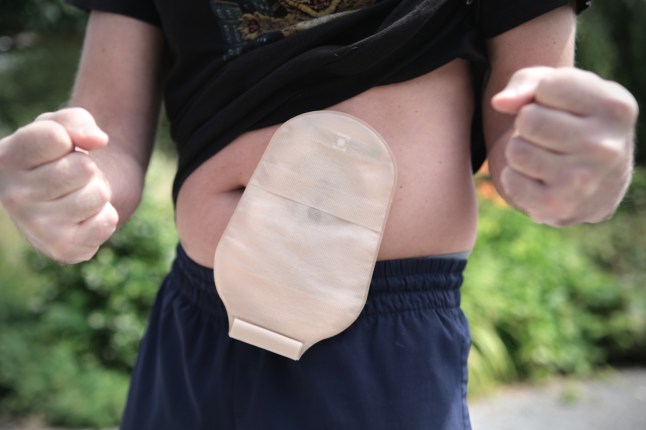
What bowel cancer symptoms should we be looking out for?
With bowel cancer becoming a more alarming issue for younger generations, it’s imperative we know what symptoms to be on the lookout for.
Dr Robin Clark, medical director for Bupa Global and UK, tells Metro these are the things we should keep in mind:
- There’s no such thing as a perfect poo – it comes in all shapes and sizes, colours and textures. Your poo reflects what you’ve eaten lately so it’ll probably be different every time you go.
- If you’ve had blood in your poo for no obvious reason, you should see your GP. The blood can be bright or dark red on the surface or mixed in with the poo – or you may notice it in the toilet bowl. Occasionally it can make your poo look black, like tar.
- You should also be aware of persistent changes in your bowel habits. This includes having to poo more or feeling like you haven’t fully emptied your bowel when you’ve been – your poo may be looser or you may find it harder to go. If any of these changes last for three weeks or more, you should see your GP.
- If you notice abdominal pain after eating, see your GP as soon as possible. Don’t put it off, early diagnosis really does save lives.
- Other symptoms include unexplained weight loss and extreme tiredness for no reason.

Dr Robin adds: ‘It can be hard to remember all the warning signs so I always advise people to be aware of what’s normal for them, and to “check-CUP for cancer”, to check for a Change that is Unexplained or Persistent.
‘It’s key that we normalise conversations about bowel movements and poo in order for people to stop feeling embarrassed and come forward if they’re experiencing symptoms.
‘It’s important to get familiar with your bowel movements, know what’s normal for you, and be aware when something isn’t right.’
While NHS screenings for bowel cancer don’t start until you’re 50, if you’re concerned about anything it’s always best to go and speak with your GP as soon as possible.
Don’t let embarrassment get in the way of saving your life
A groundbreaking new surgery might offer some hope. At 32 years old, Bianca Perea was told her stage four bowel cancer was terminal. Drug therapy, chemotherapy and surgery had removed the disease elsewhere in her body, but not in her liver.
But in the summer of 2024, Bianca had a liver transplant – the UK’s first ever for advanced bowel cancer — and she’s now cancer free.
While Bianca’s miracle operation saved her life, her oncologist at The Christie, Dr Kalena Marti warned, ‘what works for one person might not work for another.’
Public Health England figures show more than one million of those invited for a bowel cancer screening between 2020 to 2022 didn’t take up the invitation within six months of being invited. Embarrassment is a key factor, as over a third of those surveyed said poo is a taboo subject.

However, Mr Shahnawaz Rasheed, consultant general surgeon at the Cromwell Hospital, wants to reassure patients.
‘People worry about a potential diagnosis, but also perhaps worry more about what happens during an appointment, whether that’s an awkward, personal conversation or an examination,’ he explains.
‘It’s worth remembering that the doctors and nurses are there to help you through any anxieties you may have and to be sensitive to your needs.
‘And there’s no need for embarrassment — we see many patients with similar problems all the time.’
When caught early, 98% of people with bowel cancer will survive for a year or more — this figure halves when caught at a later stage.
What your poo can reveal about you
The Bristol Stool Chart can be a handy way of assessing your poos – take a look below to see which matches your latest session.
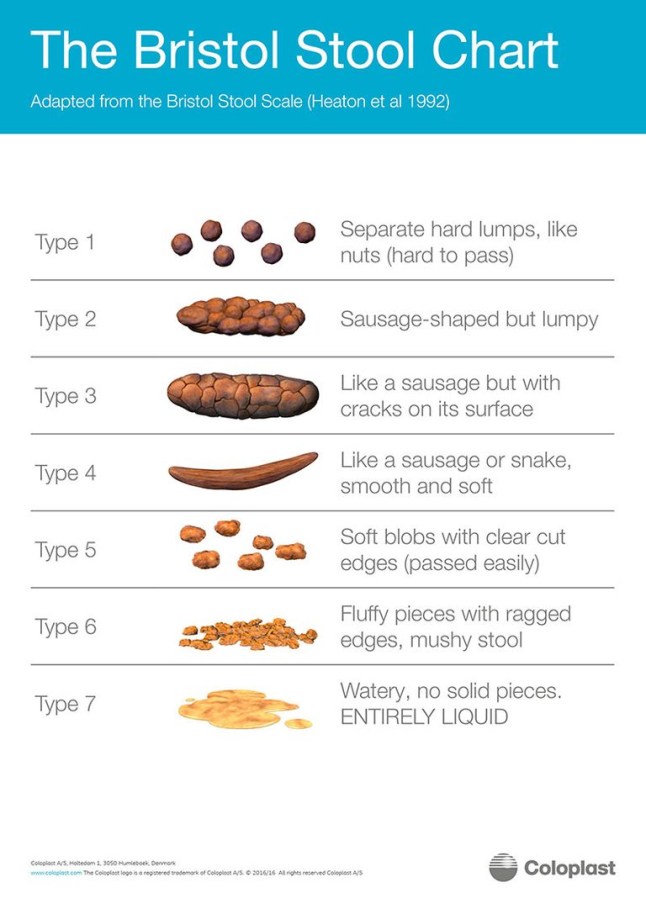
Here’s what each type can point to…
- Type one and two: constipation
- Type three and four: normal
- Type five: lacking fibre
- Type six: inflammation
- Type seven: possible infection
Do you have a story to share?
Get in touch by emailing MetroLifestyleTeam@Metro.co.uk.
Write Reviews
Leave a Comment
No Comments & Reviews