15 Feb, 2026 | Admin | No Comments
‘I donated my kidney to save a stranger – I’ve had worse hangovers’
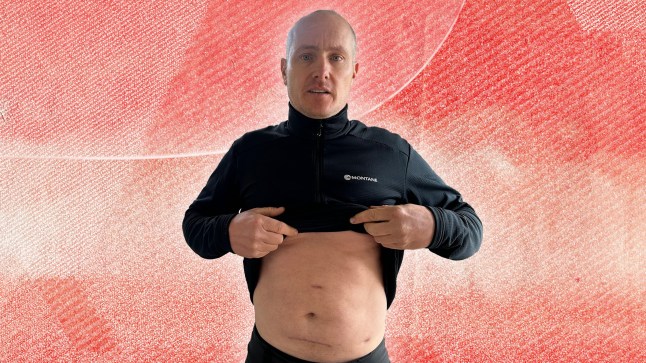
Jamie Bonning was trimming a hedge in London eight years ago when he heard a radio phone-in about the traumatic and life-threatening effects of people living on kidney dialysis.
He learned that for those suffering with kidney issues, having their blood cleaned regularly by dialysis machines, either in hospital or at home, could be be demanding, time consuming and exhausting – and Jamie, a self-employed gardener, was moved by the stories he heard.
So much so, the Londoner decided he would give one of his kidneys away – to a stranger.
‘Listening to the radio I was amazed at how much of a problem it is but how easy it is to solve. I’ve had a few clients with kidney issues, and thought, I am fit and healthy – why don’t I donate?’ Jamie, 46, tells Metro.
It wasn’t the first time he has been compelled to give some of his body away.
Jamie first gave blood at the age of 18 and donated regularly, until a holiday abroad to a location with malaria meant he had to stop for a while. In the last few years, he started again and now has 100 donations under his belt, which means he’s thought to be the capital’s most prolific contributor to blood, platelet and plasma banks.
Before 2006, it wasn’t even possible to donate a kidney to a stranger – until a new law came into place allowing for ‘non-directed altruistic living kidney donation’. In the 20 years since the legislation was passed, Jamie would become one of a small number (around 1000 people) who chose to do it.
To kickstart his plan, he registered his name with his local NHS Trust, St. Bartholomew’s. After reading all the literature, Jamie made the decision to wait a few years in until his two young nieces were older – in case any unforeseen circumstances meant they suddenly needed a new kidney.
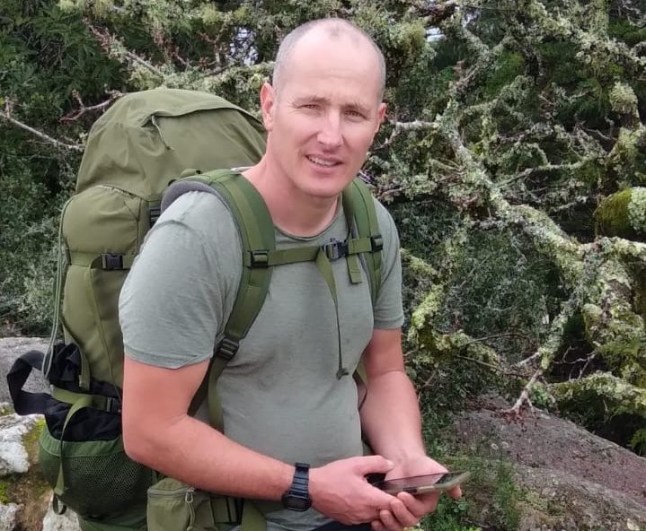
When the time was right in December 2023, he contacted the donor coordinator from St. Bartholomew’s and began a year’s worth of tests across a series of months, including CTs, ECGs, Chest X rays, and blood, urine, antibody and kidney function tests.
He also had to undergo psychological testing – to ensure he was in the right frame of mind.
‘They have to make sure you are prepared for different eventualities, like if you find out the kidney has failed and the recipient has died. Would you be able to cope with that? Or if you are giving the kidney to a family member, what if after the operation they start abusing their body and drinking all the time? There is a lot to think about,’ Jamie explains.
He was also warned that donors have to continue to take care of their health after the operation – eating well and not drinking to excess.
But the advice left Jamie largely non-plussed. ‘I wasn’t worried. I knew the other kidney grows a bit afterwards to take on the extra function. So I felt fine about it all,’ he says matter-of-factly.
In fact, his only concern was having general anaesthetic, but after reassurance from doctors, he decided to officially put himself forward as a kidney donor.
In January 2025, as he was browsing for his dinner in Upminster Waitrose, when Jamie got the call from the donation coordinator to say they had found a match recipient. He knew the operation would be immediate and the following January, he received another call telling him he was being entered into a kidney chain, which is a way of increasing the number of kidney transplants from living donors.
What is a kidney chain?
The chain starts when a donor wants to give a kidney to someone they know but is not a suitable match. Instead, that donor gives a kidney to a different patient, whose own donor then gives to another patient. One donation triggers a series of transplants – often with loved ones donating to strangers – with some chains ending with a donation to someone on the waiting list who has no living donor.
‘It was amazing news and I couldn’t wait to get started,’ Jamie remembers.
Knowing nothing about the recipient, Jamie admits that for a fleeting moment he did worry that part of his body might be given to someone undeserving.
‘It did cross my mind, but what good is that thought? You just have to make your decision and go with it,’ he says. ‘And because I was part of a chain, I knew others would be benefitting.
‘It was just something I wanted to do, and it felt right. I had made up my mind and that was that.’
As the operation loomed, in March 2025, Jamie isolated for a few days to stay healthy and on the day of the surgery, he skipped breakfast in readiness. The hardest bit, he remembers, was not being able to have his cup of tea that morning.
Meeting his surgeon at the Royal London hospital in Whitechapel, Jamie remembers sizing up the hands that were going to be inside his body during the semi-laparoscopic procedure.
‘I had a little chat with the doctors and the donor coordinator, was given the anaesthetic and that’s the last thing I remember,’ he says.
It took three or four hours for Jamie’s left kidney to be removed and he was sent through to recovery.
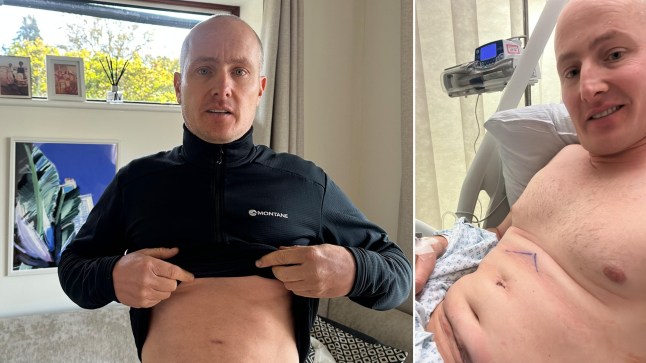
‘When I woke,I looked down, expecting to see bandages and blood, but there was just a red line with some shiny glue on it,’ he remembers. ‘I didn’t even have any stitches. It was swollen, but I was amazed that there was no drain or anything.
‘I was buzzing,’ Jamie adds. ‘It was partly the anaesthetic, but I was just really high about what I’d done. I didn’t feel any pain until later in the evening, but it wasn’t terrible. Just a little uncomfortable in my stomach when I sat up. I’ve had worse hangovers.’
306 people died while waiting for a kidney transplant in 2024 – an increase from the previous year, according to the most recent figures from Kidney Research UK. Today, more than 7,000 are on the waiting list.
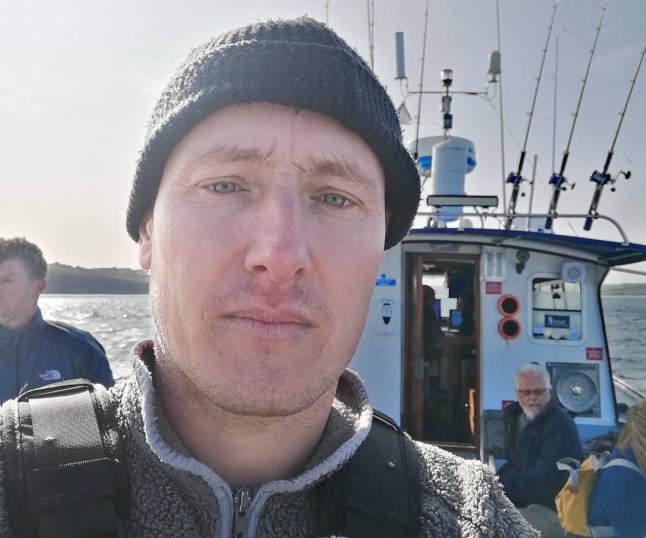
Since the operation, which took 10 weeks to recover from, Jamie says hasn’t suffered any long term effects and still enjoys doing all the things he did before: working, cooking, skiing, motorcycling and taking long walks.
‘I learned a lot from the process, how resilient the body is, and how quick to recover. I know there can be complications but for me it all went really smoothly,’ he adds.
Although he is aware the transplant was a success, Jamie doesn’t know anything about the person who is walking around with part of him inside them, but after a year they have the opportunity to contact their donor, and he would be keen to hear from them.
In the meantime, he is continuing with his altruistic hobby, registering as a stem cell donor with charity DKMS to help people with blood cancer, and donating blood regularly and plasma every fortnight.
He is also on the organ donation register, keen to help others if he should unexpectedly die.
‘I thought – If I can do it, why wouldn’t I? I’m just a normal bloke but it resonated with me that there are so many people who have been given a bad hand in life, for no reason and through no fault of their own,’ Jamie explains.
‘To think that a child – or anyone for that matter – may have benefited from my kidney is just an amazing feeling. I am really glad I did it.’
Jamie is supporting the Make Your Mark campaign from Kidney Research UK and Give a Kidney. For more information click here.
Write Reviews
Leave a Comment
No Comments & Reviews