11 Feb, 2026 | Admin | No Comments
The sign that made me realise at 21 that I had to put mum into a care home
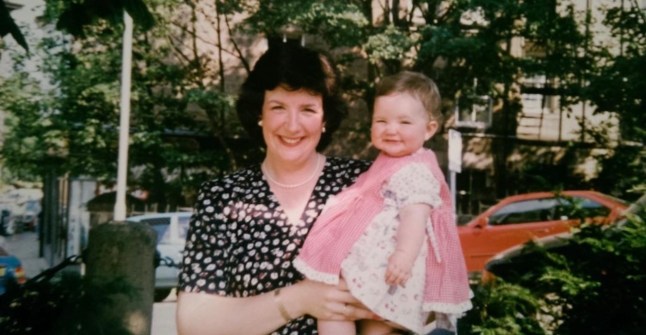
It was the shoes in the salad that indicated something was going seriously wrong for Laura Starkie.
The mum of two in her 50s had been struggling with her memory, so she saw her GP who told her she was suffering from menopausal brain fog.
‘She’d go to make a cup of tea or coffee and she’d pour the water in the canister with the tea bags, rather than in the cup,’ says her daughter, Jenny Molloy. ‘I didn’t think anything of it at the time – I’ve put orange juice on my cereal before. But that was a clear sign that something wasn’t right.’
There were other clues, including a block of cheese with a whole bite taken out, and half-eaten yoghurts in the fridge, all out of character for Jenny’s usually meticulously organised mum.
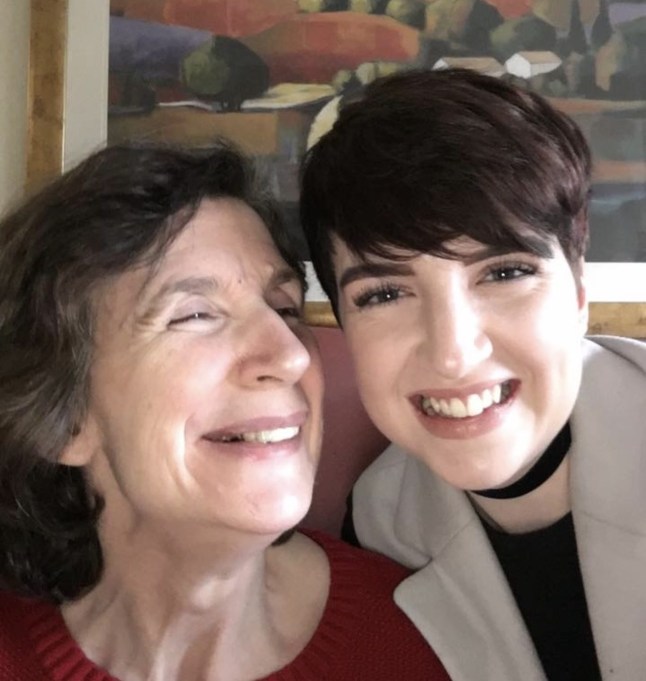
Good at maths, Laura, from Heywood in Lancashire, had worked at the Post Office, then took a checkout job at Asda.
‘Tilling up at the end of the day, always had to be spot-on, and it always was. But when Asda noticed errors, they moved her into the clothes section,’ says Jenny, 34. ‘They were really good with her, but when she started putting the shoes in the fruit and veg section, they got occupational health involved and my dad said we needed a second opinion from the doctors.’
After a brain scan and being seen at a memory clinic, Laura was diagnosed at 54 with early onset Alzheimer’s disease, the most common form of dementia in under-65s. Jenny was 17 at the time and her sister, Barbara, was 14.
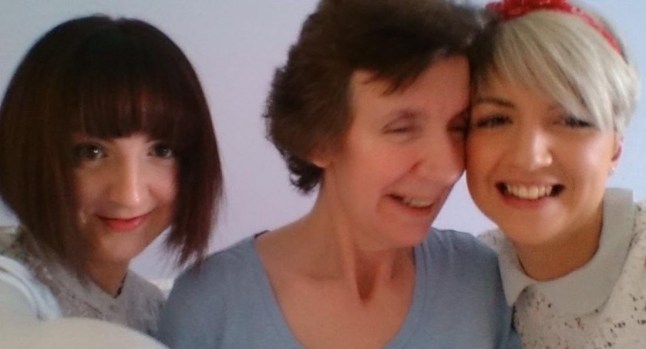
‘My dad sat me down and told me and we both had a cry,’ says Jenny, now a business consultant in Rawtenstall, Lancashire.
‘It was bizarre, because I was studying psychology at college and we were doing a unit on dementia.
‘My tutor told the class it’d be quite sensitive, so if we had grandparents suffering from this, we were OK to step out of the room. I sat there and thought, “This is happening to my mum. It isn’t right”.’
Initially Laura refused to accept the diagnosis. The family contacted the Alzheimer’s Society, which sent a representative to see how the family could be supported at home. But Laura would get up and leave the room at the mere mention of the word ‘dementia’.
‘Mum was angry it was happening to her,’ says Jenny. ‘She was a few years in by that point and her personality was starting to change. When it came up in conversation, she’d shoot it down right away and would refuse to speak to this poor lady who had come to help her.’
How to sign up to our 2026 Metro Lifeline challenge
This year Metro.co.uk is proudly supporting Alzheimer’s Society for our 2026 Lifeline campaign.
On Saturday 13 June 2026, we’re inviting our readers to take on an incredible challenge: an epic hike through the stunning Cotswolds countryside — all to help support people living with dementia.
Choose your distance: 25km, 50km or 100km.
With registration starting at just £15, and fundraising targets of £150 (25km), £225 (50km) or £330 (100km), you can push yourself as far as you want — while helping fund vital support and research.
Whether you sign up solo or take on the challenge with friends, you’ll be part of Team Lifeline, with plenty of guidance, encouragement and support along the way. Every mile you walk and every pound you raise will help make a real difference for people facing the daily realities of dementia.
For our ‘everything you need to know’ guide, click here – or if you’re already raring to sign up, click here.
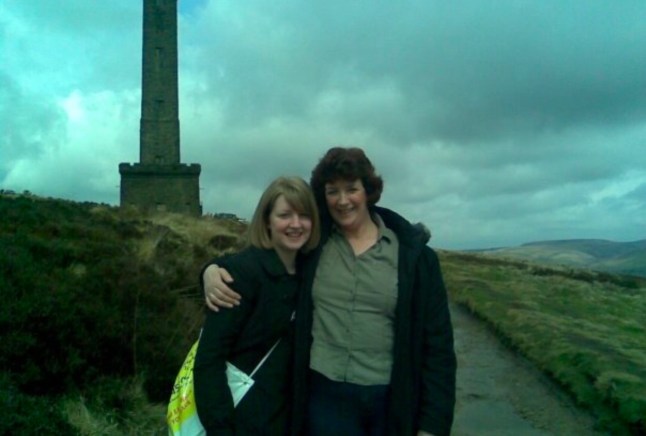
Laura had to quit her job and there was a gradual reversal in the mother-daughter role as Jenny and Barbara started to take care of her. When Jenny was 21, their dad left. Afterwards, Laura’s condition quickly deteriorated.
Jenny had planned on going to university but felt she couldn’t leave Barbara and her mum. She enrolled on a full-time apprenticeship instead, while her sister took her GCSEs and A-levels.
Laura’s brother Ronnie and sister-in-law Cath, and sister Rosa, visited regularly, helping as much as they could, while the daughters took on all the household responsibilities, sorting out the mortgage payments using their mum’s pensions and benefits, and making sure she wasn’t left at home alone for long periods.
Meanwhile, Laura’s personality changed further.
‘She would get aggressive. Not physically, but nasty to my sister if she was asking her to get dressed or brush her teeth. She’d swear at her, which was tough as I had never seen my mum like that before. She’d always been a loving and friendly person,’ says Jenny.
‘At other times she’d seem quite content. She had this stuffed Percy Pig toy from M&S and she liked to fiddle with it. But then when she learned to let herself out of the house, things got difficult. Like a child, you couldn’t take your eyes off her for a second.’
Laura would disappear up the street, or wake the whole house in the middle of the night, thinking it was daytime. When she became doubly incontinent, Jenny knew she and her sister could no longer cope alone.
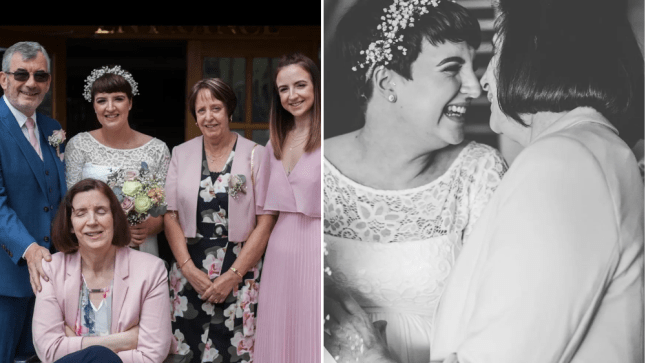
Aged 58, Laura went into residential care and the family home was sold. The sisters were just 21 and 17.
Jenny moved in with her boyfriend, who is now her husband, while Barbara moved in with her aunt and uncle.
The care Laura received was ‘amazing’, Jenny says. ‘I can’t thank them enough, because they were so fantastic with her from day one and they looked after her so well.
‘But leaving my mum on her own that first day was just horrendous. I couldn’t believe I was doing it. I felt so guilty. It was the worst feeling in the world.’
Jenny and Barbara would visit their mum after work and college. Over the years, Laura lost the ability to talk and became bedridden.
‘The last stages of Alzheimer’s and dementia are something I wouldn’t wish on anybody,’ says Jenny.
‘It was heartbreaking because she couldn’t get up and wander about like she used to. And then it progressed. She used to shut her eyes all the time. She couldn’t talk, but she would make small noises. She could smile, and laugh, but you couldn’t hear her voice.’
Laura began struggling to swallow and was in and out of hospital with infections. After two hellish years of hospital trips and recovery, one night in February 2023, after Laura, then 65, had seemingly recovered in hospital from another illness, Jenny got a call to say she’d passed away.
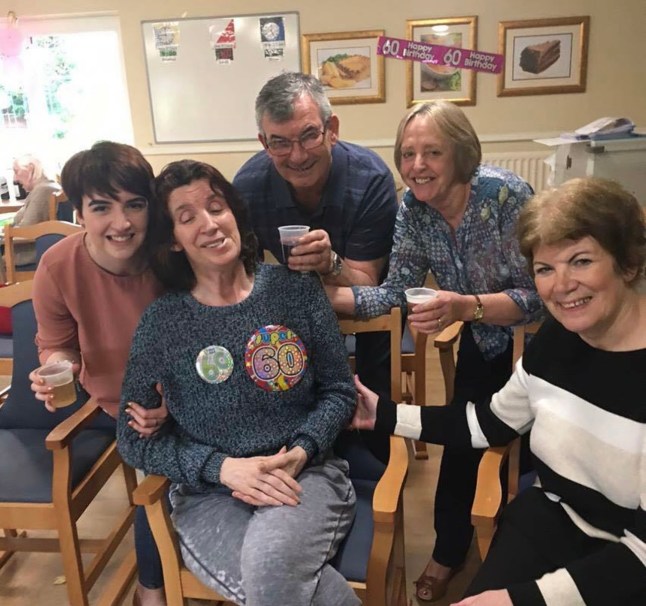
Alzheimer’s didn’t just take Jenny’s mum. It also took the years when Jenny and Barbara should have been carefree but instead were worrying about carers, mortgage payments and taking responsibility for a mother who was slowly being stolen away.
‘I’d give anything to have my mum now that I have my own children,’ says Jenny. ‘Mum came to my wedding but she was already ill. She never saw my sister get married, or have her daughter. Barbara is pregnant again and that’s the time you really want to share with your mum.’
The sisters now take part in regular walks to raise money and support for Alzheimer’s Society, through which they met other young carers.
More on dementia and Alzheimer's
‘With mum, we just tried to enjoy the nice moments as much as we could,’ says Jenny.
‘We were so stressed and upset a lot of the time, but there were so many conversations and moments of laughter that we really held on to. We would sit and watch The X Factor on Saturday nights and mum’s legs would be jigging about to the music.
‘It’s those little things you have to hold on to, remember and look back on. Those glimmers of joy.’
For dementia support and information visit Alzheimer’s Society here.
Write Reviews
Leave a Comment
No Comments & Reviews